

“Show: ‘The Times of Beauty. From the Classical World to Guido Reni and Magritte'”
- info@museicivicidomodossola.it
- 5 July 2024
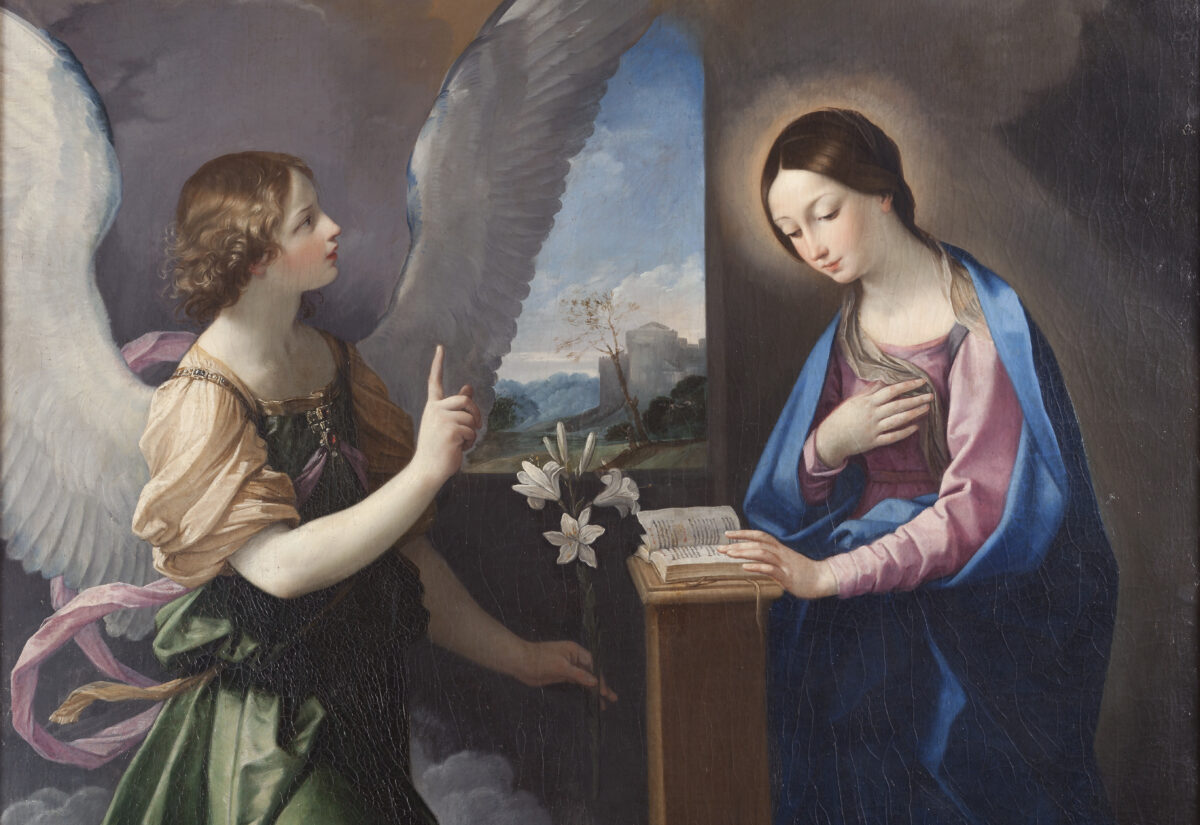
The Times of Beauty. Between the Classical World, Guido Reni, and Magritte is the title of the new major exhibition hosted by the Gian Giacomo Galletti Civic Museums at Palazzo San Francesco in Domodossola. Featuring works by Rubens, Carracci, and Guido Reni, through Pompeo Batoni and Canova, up to contemporary artists like Funi, Sironi, de Chirico, and Magritte, the exhibition highlights the constant reference through the centuries to the models and formal and spiritual values of classicism. A pivotal point of reference is the classical Roman statuary from the National Roman Museum and the Baths of Diocletian, which will be displayed in the Ossola capital for the first time.
The Times of Beauty. Between the Classical World, Guido Reni, and Magritte is the title of the exhibition inaugurated by the Gian Giacomo Galletti Civic Museums on July 18, 2024, at the Museum of Palazzo San Francesco in Domodossola. It is curated by Antonio D’Amico, Stefano Papetti, and Federico Troletti, and organized by the Municipality of Domodossola in partnership with the Bagatti Valsecchi Museum in Milan and the Angela Paola Ruminelli Foundation, under the patronage of the Piedmont Region and with the fundamental support of Morgran Italia S.r.l., Findomo S.r.l., Ultravox S.r.l., and Studio specialistico ABC -Punta Est S.r.l.
Leopardi identifies the “Time of Beauty” in 5th century BC Greece when artists like Phidias, Myron, and Polykleitos interpreted the concept of beauty as a balance of aesthetic and ethical values, expressed by the term kalokagathìa. Within the evocative setting of Palazzo San Francesco, over forty works including paintings and sculptures in marble and bronze from important Italian museums and prestigious private collections narrate the various “Times of Beauty,” i.e., the quest for a fusion of formal beauty and spiritual values rooted in classical models that permeates art history, adapting to the cultural needs of each era.
Among the great protagonists of the Domodossola exhibition, which returns to offer the public a transversal research and study path across the centuries, one can admire the “divine” Guido Reni, who in 17th century European art represents the champion of classicism in opposition to the theatricality of Baroque art and Caravaggesque naturalism. For this occasion, the Annunciation from the Civic Art Gallery of Ascoli Piceno, one of the masterpieces of the great Bolognese master, and the Saint Sebastian from a private collection come to Domodossola. The formal elegance of the Virgin and the angel in the imposing altarpiece and the sculptural torsion of the bust in the young saint testify to how in 17th century Bologna, the knowledge of classical statuary and the myth of Raphael, who revived ancient beauty, found a perfect expression in line with the culture of the time. This is a legacy that Guido Reni inherits from the Carracci. In fact, on display is the extraordinary masterpiece from the Pinacoteca della Fondazione Ettore Pomarici Santomasi in Gravina di Puglia, where Ludovico Carracci paints Saint Sebastian at the end of the 16th century, depicting him as a modern Apollo, a dancer who moves gracefully in the full vigor of his physical beauty.
No artist is insensitive to the charm of classicism, as demonstrated by the attention with which Rubens, arriving in Rome from Mantua at the dawn of the 17th century, adapts sculptural models studied in princely Roman collections to the iconographic needs imposed by the patrons. In composing the grandiose Madonna of the Rosary, documented in the exhibition by a rare sketch in a private collection, the Flemish artist updates in a Baroque key postures and gestures that can be traced back to classical models.
Following the sensational discoveries of Herculaneum and Pompeii between 1730 and 1740, neoclassical art theorists reclaimed the concept of kalokagathìa, once again associating the principles of order, harmony, composure, and “quiet grandeur,” as Winckelmann put it, with the highest moral values. Leopardi himself recognizes in Antonio Canova the artist who best embodies this fusion of beauty and noble sentiments in his works, aiming to achieve the ideal beauty. The portrait of Pauline Bonaparte, which comes to the exhibition from the Napoleonic Museum in Rome, depicts the perfect face of Napoleon’s sister as Venus Victrix, an example of how the celebration of the past and the use of classical mythology themes serve power, assuming celebratory and educational purposes.
The eclectic imprint that characterizes Italian art in the post-unification period does not exclude, neither in architecture nor in figurative art, episodes of marked reference to the Greco-Roman tradition: this is demonstrated by the Genoese sculptor Demetrio Paernio, author of numerous funerary monuments in the Staglieno cemetery, who celebrates Alexandrian art by modeling one of the most graceful figures of classicism, the Sleeping Cupid. The subject changes but not the formulation of the image inspired in the canvas by the Genoese Domenico Piola, depicting the Baby Jesus sleeping on the Cross.
The exhibition also features various small Renaissance sculptures that document the taste for collecting and the passion for Antiquity, developed particularly after the archaeological discoveries of the early 16th century.
After the revolutionary experience of the Avant-Gardes, which had decreed the end of classicism in the first two decades of the 20th century, following the traumas caused by the First World War, in 1924 the French critic Maurice Rejnal advocated a reconsideration of anti-classical positions, supporting the need for a “Return to Order,” which is evident in the works of Funi, Campigli, Sironi, de Chirico, and Magritte. These artists express the desire to reaffirm the enduring value of classicism, following the theoretical direction of Margherita Sarfatti. The exhibition offers significant examples of these artists, placed in dialogue with Renaissance and classical works. Among them, one can exceptionally admire the fascinating masterpiece by René Magritte, Rena à la fenêtre from 1937, a private collection.
Each era interprets a time of Beauty, and the Domodossola exhibition attempts to present, also with an educational intent particularly suitable for schools, some eloquent examples that make classical beauty immortal from the late Renaissance to the 20th century, highlighting models that artists adapt to the cultural demands of different historical moments.
The exhibition setup is designed by Studio Lys with the coordination of Matteo Fiorini, the lighting design is by LightScene Studio with Riccardo Rocco and Luca Moreni, while the lighting was updated and realized in collaboration with Viabizzuno. The exhibition is accompanied by a catalog published by Sagep Art Publishers.
Thursday, Friday, Saturday, and Sunday: 10:00 AM – 12:00 AM / 3:00 PM – 6:00 PM
Palazzo San Francesco
Piazza Paola Angela Ruminelli 1, 28845 Domodossola (VB)
Palazzo Silva
Piazza Giovanni Chiossi 1, 28845 Domodossola (VB)
